How Dental Implants Can be Good for Your Jawbone
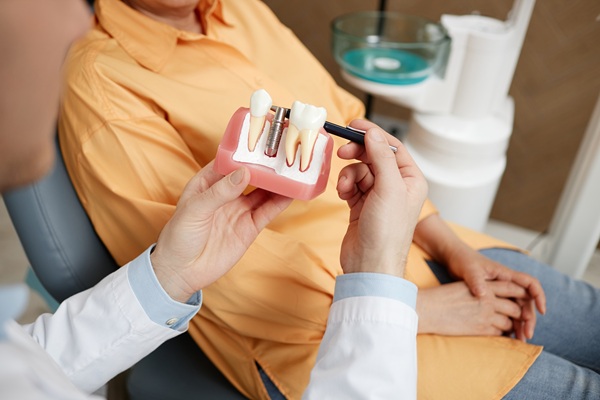
When someone is missing one or more teeth, it will affect not only their ability to eat, but also the health of their jawbone and face structure, and this can all be corrected with dental implants. As an additional concern, these implants can improve your smile, which will be good for their confidence level and their quality of life overall. It's important that patients understand how dental implants can be good for their jawbone so that they have a clear picture of how it improves their oral health. A dentist can provide more information about why this is so critical. Let us provide a bit more insight into this topic so that patients are as prepared as possible for their consultations regarding implants.
Missing teeth allow for bone loss
Teeth do not just give people something to chew with and make their smile look better; they have other purposes as well. People may not realize just how much their teeth do for their everyday life or appearance until they are missing some of them. Teeth are also especially important when it comes to jawbone health Because each tooth has a root to keep it in place, that root also stimulates and hardens the jawbone. When someone loses a tooth, they also lose the root that held it in place, and now they have a lack of nourishment and stimulation to the jawbone, and this allows their jawbone to shrink.
The loss in their jawbone is gradual, and they may not notice it at first, but over time it is likely to become evident that the appearance in their face and the strength in their jaw has deteriorated. This can lead to changes in their facial appearance, such as wrinkles around their mouth as well as a collapsed mouth and cheeks. If these changes are allowed to continue, they will make people look aged beyond their years. Some people mistakenly think that having dentures or a partial put-in will help, but this only accelerates bone loss even further.
An additional problem to losing teeth is how it will affect neighboring teeth by leading to their shifting out of position. The nearby teeth may also stop working properly or be at higher risk for loosening and falling out. Also, the shrinking of the jawbone can cause an even higher risk of cavities and gum disease taking place in and around the surrounding teeth. People should be aware of just how far-reaching dental issue can be so that they understand the need for immedate dental care when issues arise. Early intervention could make all of the difference when it comes to tooth and jawbone health.
Dental implants act like natural teeth
For most people, it's important that their teeth always look natural. This is especially true if they must have dental work done. Fortunately, implants offer this natural look that many people prefer.
Dental implants work to restore the proper function of teeth. Chewing food creates pressure on the jawbone. This pressure travels from the sharp edge of the front teeth or often the surface of the molars down into the root of your teeth and the jawbone. This pressing force that happens whenever someone chews their food has the benefit of stimulating the jawbone, and this stimulates the growth of new bone cells. As these new bone cells are stimulated to grow, the jawbone remains stronger and denser.
The great news about dental implants is that they will also stimulate the growth of new bone cells, and even if someone has been without teeth for a while, chewing with these implants embedded in the jaw will bring back some of that lost jawbone tissue. This is because they sit in the mouth like a real tooth, and it is the only form of tooth replacement that can mimic the same stress-producing action that real teeth produce. For this reason, the jawbone remains in a constant state of renewal, and receives the benefits of a healthier smile and a more symmetrical and younger-looking face.
Talk about dental implants today
Once the implants are in, they can be taken care of just like natural teeth, and for this reason, people might even forget you ever lost a tooth. Because they stay in permanently, the smile will continue to look and function at its best. To learn more, people should reach out to a dentist to learn more about their options.
Request an appointment here: https://www.ayfamilydental.com or call A.Y. Family Dental at (630) 687-1322 for an appointment in our Naperville office.
Check out what others are saying about our dental services on Yelp: Dental Implants in Naperville, IL.
Related Posts
When a single person seeks dental care, they typically go for whoever provides the services they need. However, many find family dentists are the one-stop location for multiple family members needing dental treatment. Here are several benefits to seeking professional care from a family dentist.Family dentists receive the same schooling as general dentists. However, they…
A general dentist plays an essential role in maintaining lifelong oral health by providing preventive, restorative, and cosmetic care for patients of all ages. While specialists focus on particular aspects of dentistry, a general dentist provides a wide range of services to address routine needs and detect issues early. Understanding what distinguishes a general dentist…
A family dentist is a dental health care professional who can provide for the oral health needs of a range of individuals, no matter their age. This type of dental professional is recommended to families for many reasons. Here is a closer look at what these professionals offer and five good reasons to choose one…
Most patients know they should visit their family dentist every six months for a checkup. It is not recommended to skip these biannual checkups, even if you have great oral health. Dentists provide not only restorative treatments to correct oral health conditions but also preventive treatments to help patients avoid those conditions in the first…